




Table of Contents
- Why Buy Bulk Eco-Friendly Food Containers
- Quick Comparison Table
- Bagasse Food Containers with Lids for Hot Food Service
- Kraft Food Containers Wholesale: Bowls and Noodle Boxes
- Wholesale Compostable Food Containers: Material Breakdown
- Custom Printed Takeaway Containers for Brand Identity
- Bulk Ordering Guide: How to Choose and Calculate Quantities
- Real-World Disposal and End-of-Life: Compostable vs Recyclable
- Frequently Asked Questions
Last Updated: October 18, 2026
Why Buy Bulk Eco-Friendly Food Containers
The pressure on food businesses to reduce waste has never been higher. Environmental regulations are tightening, customers expect sustainable packaging, and disposal costs keep climbing. When you buy bulk eco-friendly food containers, you can meet customer expectations and regulatory requirements.
At Propus Packaging, we help cafés, restaurants, and food delivery operations switch to sustainable packaging. The key is understanding which materials work for which applications, calculating your true volume needs, and sourcing from suppliers who specialise in bulk orders.
This guide covers everything you need to know to make the switch.
Quick Comparison Table
| Container Type | Best For | Material | Heat Resistant | Price Range (per 100) |
|---|---|---|---|---|
| Bagasse 6×6″ Burger Box | Burgers, loaded fries, sandwiches | Sugarcane pulp | Yes | £6-8 |
| Bagasse 7×5″ Clamshell | Fish & chips, kebabs, smaller portions | Sugarcane pulp | Yes | £8-10 |
| Kraft Round Bowl | Salads, cold foods, noodles | Recycled kraft paper | Moderate | £12-15 |
| Kraft Noodle Box | Asian dishes, rice, hot or cold | Kraft paper with PE lining | Yes | £6-8 |
Bagasse Food Containers with Lids for Hot Food Service
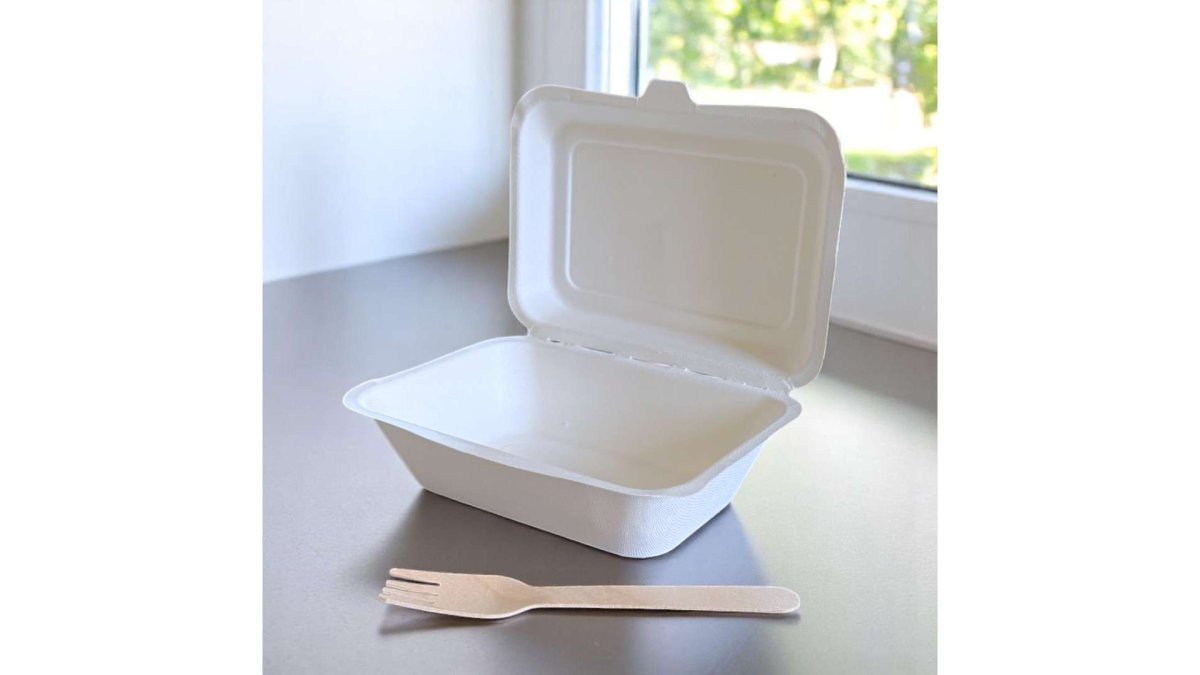
Bagasse containers dominate the hot food packaging market for good reason. Made from sugarcane pulp, a renewable agricultural byproduct, bagasse clamshells are fully biodegradable, compostable, and naturally resistant to oils and sauces. They provide heat insulation without the environmental guilt of plastic.

The material's natural grease resistance means your fish and chips, kebabs, or curry won't leak through the bottom. The clamshell design keeps lids securely attached, reducing the risk of spills during delivery. For high-volume operations, this reliability cuts down on customer complaints and replacement orders.
Bagasse containers work well in industrial composting facilities across the UK. For home composting, these containers take 6-12 months to break down.
Small Bagasse 7×5″ Clamshell: Compact Portions
The 7×5″ size (185×134×65mm) is your go-to for smaller portions: fish and chips orders, single kebabs, or loaded fries. At £20 per pack of 250, the Bagasse 7x5" Clamshell Meal Box 185x134x65mm Pack 250 delivers excellent value for high-volume operations.
This size works particularly well for takeaway operations where customers expect quick, easy handling. The compact dimensions also mean more containers fit in delivery bags, reducing the number of trips your couriers need to make.
Medium Bagasse 6×6″ Burger Box: Versatile Standard
The 6×6″ burger box (152×152×78mm) is the workhorse of the bagasse range. At £31.25 per pack of 500, the Bagasse 6x6" Clamshell Burger Box 152x152x78mm Pack 500 handles medium-sized burgers, loaded jacket potatoes, deli rolls, and generous portions of fries. It's the most versatile size, large enough for a real meal, compact enough for efficient packing.
High-volume delivery operations often standardise on this size because it works across their entire menu. One container type means simpler inventory management and faster staff training.
Large Bagasse 8×8″ and 9×6″ Clamshells: High-Volume Portions
For generous portions or family-size servings, the 8×8″ (205×205×80mm) and 9×6″ (230×155×78mm) options give you room. The Bagasse 8x8" Clamshell Meal Box 205x205x80mm Pack 200 costs £27.50 per pack of 200, while the Bagasse 9x6" Clamshell Meal Box 230x155x78mm Pack 250 runs £24.75 per pack of 250.
These larger boxes suit restaurants with higher average order values or catering operations where presentation and portion size matter.
Kraft Food Containers Wholesale: Bowls and Noodle Boxes
Kraft containers are your answer for cold foods, salads, and Asian dishes. Made from recycled kraft paperboard with a PE (polyethylene) lining, they're sturdy, leakproof, and fully recyclable. The PE lining provides moisture resistance without compromising the recyclability of the overall container, when recycled properly, the lining separates from the paper during processing.
Kraft containers are ideal for high-volume cold food operations. They're microwave and freezer safe, so customers can reheat or store leftovers without transferring to another container.
Kraft Round Bowls with Lids: Salads and Cold Foods
Round bowls are perfect for salads, grain bowls, and cold preparations. The Kraft 500ml Round Bowl With Clear RPET Lid Pack 300 costs £37.50 per pack and features a transparent RPET (recycled polyethylene terephthalate) lid that lets customers see the contents. This visibility builds confidence in portion size and quality.

For a more economical option, the Kraft 500ml Round Bowl With Kraft Lid Pack 300 runs £51.00 per pack and uses a solid kraft lid that retains heat better, useful if your bowls contain warm grains or warm dressing.

Both versions are stackable, reducing storage footprint in your kitchen or delivery vehicle.
Kraft Noodle Boxes: Asian Dishes and Hot Foods
Noodle boxes work brilliantly for more than just noodles. They're ideal for rice, curries, stir-fries, and any hot or cold Asian-inspired dish. The secure interlocking lid and PE lining keep food fresh and insulated.
The Kraft 16oz Round Noodle Box Pack 500 costs £32.50 per pack for smaller portions. The Kraft 26oz Round Noodle Box Pack 500 is £39.50 for medium servings, and the Kraft 32oz Round Noodle Box Pack 500 costs £48.75 for generous portions.
Wholesale Compostable Food Containers: Material Breakdown
Understanding the difference between compostable, recyclable, and biodegradable containers helps you choose correctly for your operation and communicate honestly with customers.
Compostable containers (bagasse, some plant-fibre options) break down in industrial composting facilities within 90-180 days, leaving no toxic residue.
Recyclable containers (kraft paper with PE lining) are processed through standard paper recycling streams. The PE lining separates during recycling. Recycling requires less energy than manufacturing new containers from virgin materials.
Biodegradable containers break down over time in any environment, but the timeline varies widely depending on conditions. This term is less regulated than compostable, so it's worth checking certifications.
For most UK food businesses, bagasse (compostable) and kraft (recyclable) are strong options. Both are certified and clearly understood by customers.
Custom Printed Takeaway Containers for Brand Identity
Branded packaging turns every delivery into a marketing moment. Your logo, colours, and messaging on the container remind customers of your business every time they eat. Custom printing also signals professionalism and care, it tells customers you're serious about quality.
Propus Packaging offers custom branding services on bagasse and kraft containers. The process is straightforward: you provide your design, we handle the printing and delivery. Lead times are typically 2-3 weeks for custom orders, so plan ahead during busy seasons.
Kraft 500ml Round Bowl With Kraft Lid Pack 300 →
Custom printing works best on larger volumes because setup costs are spread across more containers, lowering the per-unit premium.
Bulk Ordering Guide: How to Choose and Calculate Quantities
Ordering the right quantity is the difference between efficient operations and wasted storage space or emergency reorders at premium rates.
Container Size and Food Type Matching
Start by auditing your current menu and identifying which containers each item uses. A burger operation might use three sizes: 6×6″ for standard burgers, 7×5″ for lighter items, and 9×6″ for combo meals. A salad bar might standardise on 500ml kraft bowls for simplicity.
Map your top 20 menu items to container types. This gives you a clear picture of your mix. Most operations find that 60-70% of orders use one or two container sizes, with the remainder spread across alternatives.
Calculating Monthly Demand and Stock Levels
Here's the practical formula most businesses use:
Monthly demand = (Average daily orders × days per month) × 1.15
The 1.15 multiplier adds a 15% buffer for waste, breakage, and unexpected demand spikes. It prevents stockouts during busy periods.
Example: A café averaging 200 takeaway orders per day across 30 days = 6,000 containers per month. With a 15% buffer, order 6,900 containers.
Break that across your container mix. If 60% are 6×6″ boxes, 25% are 7×5″, and 15% are noodle boxes, you'd order:
- 6×6″: 4,140 units
- 7×5″: 1,725 units
- Noodle boxes: 1,035 units
This approach prevents over-ordering on slow-moving sizes while ensuring you never run short on your bestsellers.
Leak Resistance and Heat Retention Performance
Bagasse containers naturally resist oils and sauces due to the material's structure. Kraft containers achieve leak resistance through PE lining. Both perform well in real-world conditions, the difference is subtle.
Bagasse provides heat retention for piping-hot foods like chips or curry. Kraft containers are better for cold foods and items that need visibility (salads, grain bowls). Choose based on your menu.
Real-World Disposal and End-of-Life: Compostable vs Recyclable
Where your containers end up matters as much as what they're made from.
Across the UK, industrial composting capacity is growing but still limited. WRAP's composting infrastructure report documents the current state of composting facilities.
Standard paper recycling accepts kraft containers in most councils, though some require removal of the PE lining first. Contact your local waste authority to confirm their process.
Many food businesses use a hybrid approach: bagasse for hot foods (which degrade faster in composting), kraft for cold foods (which recycle easily). This balances environmental impact with practical disposal.
When communicating with customers, be specific about disposal instructions.
Environment Agency guidance on food packaging waste provides detailed standards for food-contact packaging in the UK.
Switching to bulk eco-friendly food containers is a straightforward business decision when you focus on the numbers. Stronger customer loyalty can be a benefit.
Propus Packaging specialises in exactly this, helping food businesses source sustainable packaging at scale without premium pricing. Start with a test order of your top three container sizes, track your waste and costs for a month, then scale up with confidence. Learn More.
Frequently Asked Questions
Where can I buy bulk eco-friendly food containers?
You can buy bulk eco-friendly food containers directly from suppliers specialising in takeaway packaging. Propus Packaging offers a full range of bagasse and kraft containers in bulk packs starting from 200 units, with no minimum order requirements and free delivery on orders over £100. All products are in stock and available for next working day delivery on parcel orders placed by 1pm.
Are bagasse food containers suitable for hot food?
Yes, bagasse food containers are excellent for hot food service. Bagasse clamshell boxes provide natural heat insulation, keeping hot meals warm whilst in transit. They also have natural leak resistance to oils and sauces, making them ideal for fish and chips, kebabs, burgers, curries, and jacket potatoes. The material is sturdy and ergonomic, ensuring food stays secure during delivery.
What's the difference between compostable and recyclable food packaging?
Compostable packaging, such as bagasse containers, breaks down into natural materials within industrial composting facilities, typically within 90 days. Recyclable packaging, like kraft paper containers, can be processed and remade into new products through standard recycling streams. Bagasse is fully biodegradable and compostable, whilst kraft paper is recyclable. Both are eco-friendly alternatives to single-use plastic, but they follow different end-of-life pathways.
Can kraft food containers hold wet or oily foods?
Yes, kraft food containers are designed to hold wet and oily foods safely. They feature PE lining that creates a leak-proof barrier, preventing grease and moisture from escaping or damaging the packaging. The kraft paper construction combined with the PE coating provides insulation and maintains food freshness whilst keeping containers structurally sound during storage and delivery.
How do I calculate the right bulk order quantity for my business?
Start by tracking your weekly or monthly food output and the average container size per order. Order in bulk packs (typically 200-1,000 units) to reduce per-unit costs. Factor in seasonal variation, peak trading days, and storage space. Propus Packaging offers no minimum order requirements, so you can test different quantities before committing to larger volumes.

