





























Table of Contents
- Your Essential Catering Supplies Checklist for 2026
- Eco-Friendly Takeaway Packaging Requirements
- Food Safety Compliance Checklist 2026
- Bulk Catering Supplies Wholesale: How to Buy Smart
- Sustainable and Eco-Friendly Catering Supplies in Practice
- Choosing the Right Catering Supplies for Your Event
- Conclusion
- Frequently Asked Questions
Last Updated: September 28, 2026
Your Essential Catering Supplies Checklist for 2026
Building an essential catering supplies checklist 2026 means auditing every item your operation touches, from core equipment to hygiene consumables, against current regulations. This guide from Propus Packaging covers the equipment, compliance and purchasing decisions that keep a catering business running.
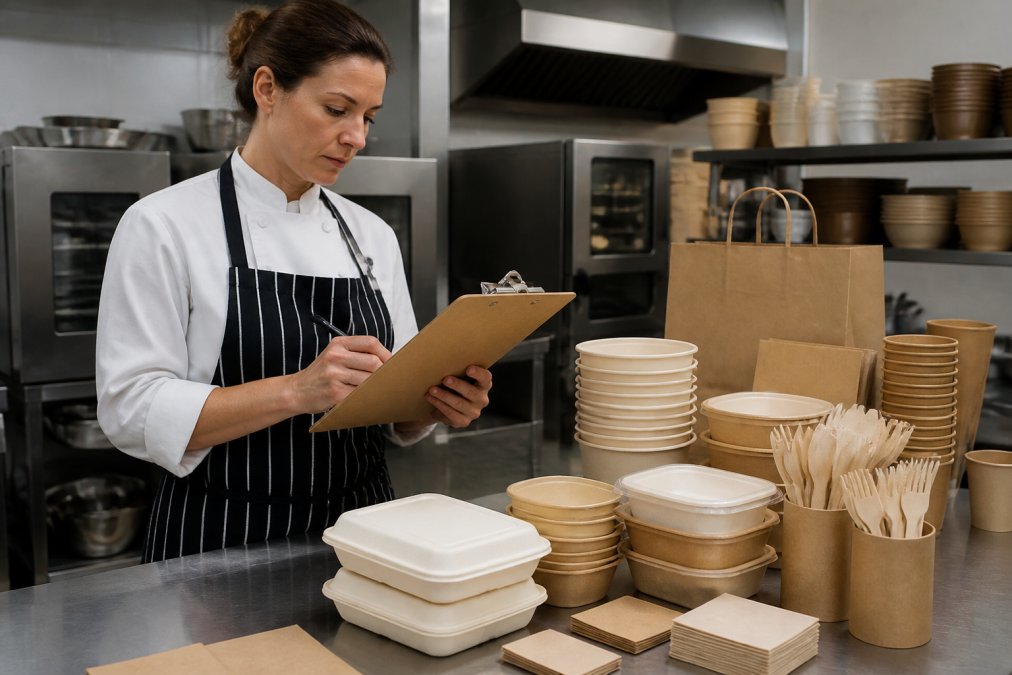
Core Equipment and Consumables
Core equipment covers tools that touch food directly; consumables are everything you use up and reorder. Split the two so reordering stays predictable.
- Chafing dishes, hot boxes and insulated transport containers
- Chopping boards, colour-coded by food type
- Serving utensils, tongs and portion scoops
- Takeaway containers, cups, cutlery and carrier bags
- Kitchen roll, bin liners and cleaning cloths
Hygiene and Safety Supplies
Hygiene supplies protect your customers and your food hygiene rating. Stock them as a standing line item, never an afterthought.
- Disposable gloves, changed between tasks
- Sanitiser sprays and surface wipes
- Probe thermometers and spare probes
- Blue plasters and hairnets
- First aid kit, checked and restocked
Eco-Friendly Takeaway Packaging Requirements
Eco-friendly takeaway packaging requirements in the UK cover both what your packaging is made from and what it costs to put on the market. Two rules matter most: Extended Producer Responsibility fees and the Plastic Packaging Tax.
Extended Producer Responsibility (EPR) Fees
EPR makes packaging producers and importers pay fees based on the weight and recyclability of the packaging they handle. If you import or brand packaging, you may carry reporting obligations. Check the Environment Agency guidance on packaging waste for your exact position, as thresholds and categories are updated periodically.
Plastic Packaging Tax and Bans
The Plastic Packaging Tax applies to plastic packaging made or imported into the UK containing less than a set percentage of recycled plastic. Single-use plastic bans already cover plastic cutlery, plates and polystyrene containers. Bagasse, kraft and wooden alternatives remove the problem at source.
Food Safety Compliance Checklist 2026
Food safety compliance is the part of your checklist regulators will actually inspect, so it deserves its own document. A food safety compliance checklist 2026 should cover HACCP, traceability, allergen management, temperature control and cross-contamination prevention, with a named person responsible for each line.
HACCP, Traceability and Allergen Management
HACCP is a management system in which you identify food safety hazards, set controls and keep records. Traceability means knowing where every ingredient came from and where it went. Allergen management requires accurate labelling and separation of the fourteen regulated allergens.
Temperature Control and Cross-Contamination Prevention
Temperature control means keeping chilled food cold, hot food hot and recording both. Cross-contamination prevention means separating raw and ready-to-eat food at every stage, from delivery to service.
| Control Point | Target | Frequency |
|---|---|---|
| Fridge temperature | 0-5°C | Twice daily |
| Freezer temperature | -18°C or below | Daily |
| Hot holding | 63°C or above | Every service |
| Probe calibration | Ice and boiling water check | Weekly |
| Cooking core temperature | 75°C for two minutes (or equivalent) | Every batch |
| Cooling cooked food | 63°C to 8°C within 90 minutes | Every batch |
Records, Training and Inspection Readiness
Your records are the evidence that the system works. Keep a single compliance folder, physical or digital, containing:
- HACCP plan and any amendments
- Daily temperature and cleaning logs
- Allergen matrix, dated
- Supplier and batch traceability records
- Training records for every food handler
- Incident and complaint log
Digital Tools for Compliance Records
Paper logs still work, but digital tools suit multi-site or high-volume caterers. A shared spreadsheet with a timestamped tab per day, or a food safety app, gives searchable records and automatic reminders for probe calibration and cleaning schedules. The real advantage is the audit trail: when a supplier recall lands, you can filter by batch code and see every affected service in seconds.
Compliance is a daily habit, not a document. The checklist is only as strong as the records behind it, and the records are only as strong as the person who signs them.
Bulk Catering Supplies Wholesale: How to Buy Smart
Bulk catering supplies wholesale only saves money when the buying process is disciplined. Ordering the same way you always have is how margins quietly erode.
Digital Inventory Management and Supplier Consolidation
A simple digital inventory system, even a shared spreadsheet with reorder thresholds, tells you what is running low before a busy weekend catches you out. Set a par level for every consumable and reorder when you hit it.
Emergency Contingency Supplies and Stock Buffers
Emergency contingency supplies are the items you keep aside for the day a delivery fails or a booking doubles. Every caterer needs a buffer sized to their volume.
- One week of packaging for your top three products
- Spare thermometers and probe wipes
- Backup cleaning chemicals
- A short list of alternative suppliers for critical items
Store your contingency buffer physically separate from daily stock. If it sits on the same shelf, staff will use it during a normal rush and you will have nothing left when a delivery genuinely fails.
Sustainable and Eco-Friendly Catering Supplies in Practice
Sustainable catering supplies only work if they perform in real service conditions and fit the waste and reporting systems you operate. Today's materials handle hot, cold and wet food without the compromises of a few years ago. The harder part is operational: what you buy, how you track it, and where it goes after the event.
Reducing Single-Use Plastics Without Losing Performance
Reducing single-use plastics comes down to swapping materials, not sacrificing function. Bagasse plates are sturdy and naturally leak proof, so they hold up with saucy or oily food. Kraft paper cups with a ripple wall stay cool and leakproof, and wooden cutlery handles hot and cold dishes.
4 in 1 Wooden Takeaway Cutlery Set Pack →
Extended Producer Responsibility and Packaging Data
If you import, brand or handle packaging above the relevant thresholds, you may carry reporting obligations under the packaging waste regime. For a catering business, packaging is no longer just a cost line; it is a data line. You need to know the weight and material composition of what you put on the market.
Post-Event Waste Disposal and Recycling
Post-event waste disposal starts with what you buy, not what you throw away. Compostable and biodegradable packaging only reduces general waste if your disposal route matches the material. Confirm with your waste contractor which streams accept your packaging before you promise customers anything.
A practical pre-event checklist for waste:
- Confirm with the venue whether they segregate recycling, food waste and general waste on site
- Ask your waste contractor which of your packaging items they accept, and in which stream
- Provide clearly labelled bins at the point of disposal, not just at the back of house
- Brief staff on which item goes where, especially for mixed-material items
- Record the volume or weight of waste per event if you report on sustainability
Digital Inventory and Sustainability Tracking
Sustainability claims are easier to defend when backed by data. A simple digital inventory system, even a shared spreadsheet with a column for material type and weight, lets you report packaging volumes, track waste reduction targets, and spot where a swap would have the biggest impact.
Choosing the Right Catering Supplies for Your Event
Choosing the right supplies for an event means matching packaging and equipment to the service style, guest count and budget before you order a single item.
Service Style: Plated vs Buffet
Plated service demands more staff and precise portion control, but presents better for formal events. Buffet stations need fewer servers and more holding equipment: chafing dishes, serving utensils and stackable plates guests can carry easily.
Guest Count, Budget Allocation and Staffing Requirements
Guest count drives everything: how much food, how much packaging and how many staff. A practical budget split for most catered events is roughly half on food, a fifth on staffing, a fifth on equipment and packaging, and the remainder on contingency.
Caterers consolidating packaging and hygiene supplies into a single order, especially smaller operations that want no minimum order requirements and fast delivery.
Conclusion
The hardest part of catering is not the cooking. It is keeping every supply, record and regulation aligned mid-service while orders keep coming. Propus Packaging supplies the eco-friendly takeaway packaging, hygiene consumables and bulk catering supplies that keep that operation running, with free delivery on orders over £100, next working day delivery on parcel orders placed by 1pm, and custom branding services to put your name on every container.
Frequently Asked Questions
What are the essential things to include in a catering checklist?
A complete catering supplies checklist covers catering equipment (chafing dishes, serving utensils, trays), food safety compliance items (thermometers, sanitiser, nitrile gloves), packaging (bagasse plates, kraft carrier bags, ripple wall cups), hygiene consumables, and emergency contingency supplies. In 2026, add eco-friendly takeaway packaging requirements and a digital inventory management system to track stock levels. Propus Packaging offers a 4 in 1 Wooden Takeaway Cutlery Set (pack of 500, £29.25) and a Bagasse 9" Round Plate (pack of 500, £25.00) to cover two core checklist items.
What are the four C's of food safety in catering?
The four C's are Cleaning, Cooking, Chilling and Cross-contamination. Cleaning means sanitising surfaces and equipment between tasks. Cooking requires reaching safe internal temperatures (75°C for reheated food). Chilling keeps food below 8°C, and cross-contamination prevention separates raw and ready-to-eat items. Your food safety compliance checklist 2026 should include daily temperature logs, colour-coded chopping boards, and nitrile gloves like Propus Packaging's Black Nitrile Gloves Powder Free (pack of 1000, £33.75).
What are the current UK food packaging regulations for 2026?
The UK's Extended Producer Responsibility (EPR) for packaging requires businesses with a turnover above £1 million and handling over 50 tonnes of packaging to report data and pay fees based on weight and recyclability. The Plastic Packaging Tax applies at £217.85 per tonne for packaging with less than 30% recycled content. Single-use plastic bans cover plates, cutlery, bowls and balloon sticks. Complying with eco-friendly takeaway packaging requirements means switching to materials like bagasse, kraft paper and birchwood, all available from Propus Packaging.
How do I calculate quantities for catering events?
For a buffet, plan 200-300g of protein per guest, 150-200g of sides, and 1-2 pieces of bread. Drinks: 2-3 cups per person for a 2-hour event. For 30 guests, that's roughly 6-9kg of protein and 4.5-6kg of sides. Packaging: 1.5 containers per guest to allow for seconds or takeaway. Propus Packaging's Brown Ripple Wall 8oz Paper Cups (pack of 500, £23.00) suit hot drinks, while Kraft Paper Carrier Bags (pack of 500, £39.00) handle takeaway orders.
Which eco-friendly catering supplies are mandatory for modern food businesses?
No supplies are strictly mandatory, but UK regulations effectively require alternatives to banned single-use plastics. You must not supply plastic plates, cutlery, bowls or balloon sticks. For takeaway, bagasse containers, kraft paper bags and wooden cutlery are common compliant choices. Propus Packaging's 4 in 1 Wooden Takeaway Cutlery Set (pack of 500, £29.25) includes a napkin and is fully compostable. Pair with Bagasse 9" Round Plates (pack of 500, £25.00) for a fully eco-friendly takeaway packaging requirements solution.
How many trays of food do I need for 30 guests?
A standard full-size catering tray (approx. 30cm x 50cm) serves 20-25 portions as a main, or 40-50 as a side. For 30 guests, plan 2 full trays of protein, 2 of sides, and 1 of dessert. If you offer a buffet with multiple options, 3-4 half trays per course work better. Always prepare 10% extra for unexpected guests or larger appetites. Use your guest count and budget allocation to finalise quantities.
What should I look for when buying bulk catering supplies wholesale?
Focus on unit cost, minimum order quantities, delivery speed and stock reliability. Consolidating suppliers reduces admin and can unlock better pricing. Propus Packaging offers no minimum order, free nationwide delivery on orders over £100, and next working day delivery for parcel orders placed by 1pm. Their bulk catering supplies wholesale range includes 500-pack cutlery sets, 500-pack plates and 1000-pack gloves, all in stock. Always check reviews and ask for references from similar-sized food businesses.
How can I manage waste from a catering event responsibly?
Plan a waste station with clearly labelled bins for recycling, food waste and general waste. Choose compostable packaging like bagasse plates and wooden cutlery so food-contaminated items can go into commercial composting where available. Arrange collection with a licensed waste carrier. Track waste volumes to adjust future orders. Post-event waste disposal and recycling should be part of your catering supplies checklist 2026 to meet sustainability goals and reduce costs.