




Table of Contents
- Sustainable catering packaging for events: What matters most
- Quick comparison table
- Bagasse food containers: Heat retention and leak resistance
- Kraft catering boxes: Durability and branding flexibility
- Compostable catering packaging: End-of-life and disposal
- Durable takeaway containers for hot food: Material selection
- Choosing the right quantity and mix for your event
- Cost, stock reliability, and procurement strategy
- Frequently Asked Questions
Last Updated: October 16, 2026
Sustainable catering packaging for events: What matters most
Sustainable catering packaging isn't just about feeling good. It's about durability under real conditions, keeping hot food hot, preventing leaks during transport, and surviving the chaos of high-volume service.
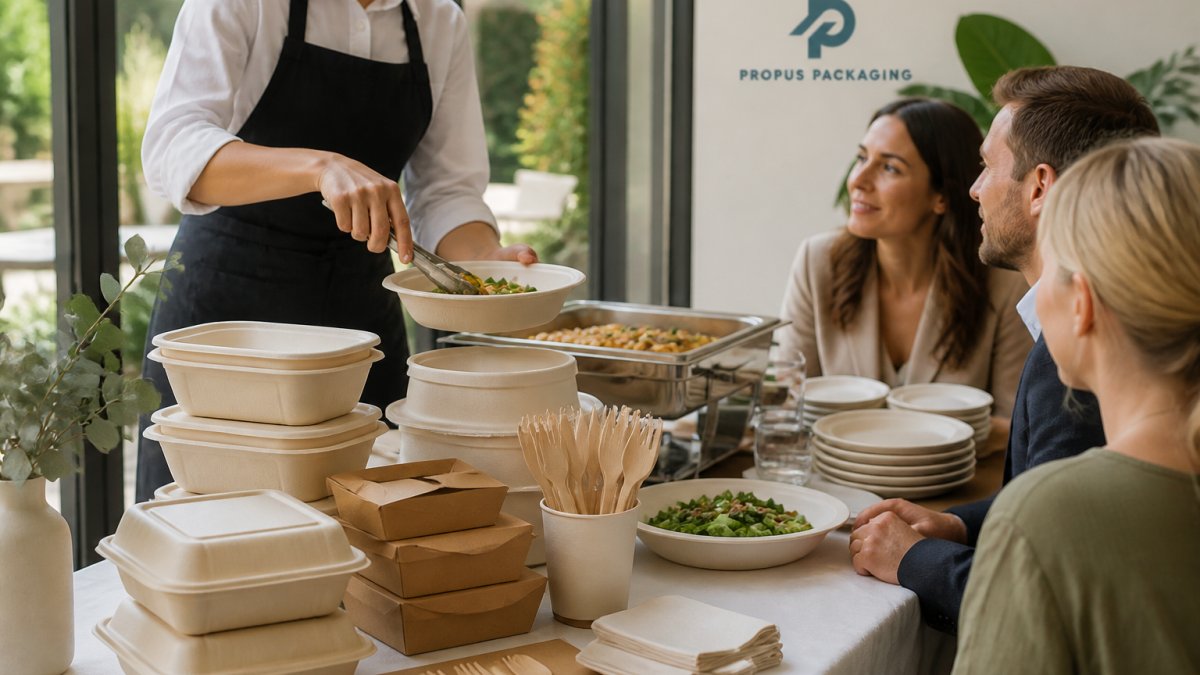
At Propus Packaging, we work with caterers, event organisers, and food businesses to find packaging that performs.

This guide covers seven practical options for sustainable catering packaging. We'll show you what each does well, where it falls short, and how to calculate quantities for your specific event size and service style.
Quick comparison table
| Packaging Type | Best For | Starting Price | Key Strength | Main Limitation |
|---|---|---|---|---|
| Bagasse containers | Hot food, high volume | £20-£25 | Heat retention, leak resistance | Limited to specific portion sizes |
| Kraft boxes with lids | Mixed temperatures, professional look | £51 per 300 units | Branding flexibility, durability | Slightly higher cost per unit |
| Compostable clamshells | Events with composting facilities | £20-£31 | Certified end-of-life, guest communication | Requires local infrastructure |
| Durable takeaway containers | Hot food, oils and sauces | £22-£25 | Thermal performance, sauce resistance | Less suitable for cold items |
| Wooden cutlery sets | Eco-conscious branding | £29.25 per 500 | Fully compostable, included napkin | Single-use only |
| Moulded pulp cup carriers | Beverage service | £22 per 360 units | Sturdy, eco-friendly, multi-cup capacity | Specific to drink service |
| Kraft carrier bags | Transport and delivery | £39 per 500 | Customisable, recyclable, professional | Not food-contact surface |
Bagasse food containers: Heat retention and leak resistance
Bagasse containers deliver on the two things caterers worry about most: keeping food at the right temperature and preventing leaks that damage presentation or create a mess during delivery.
Made from sugarcane fibre, bagasse is naturally sturdy and heat-resistant. Unlike paper-based alternatives, it doesn't soften when holding hot food for extended periods.
The Propus Packaging Bagasse 6x6" Clamshell Burger Box (Pack 500) at £31.25 handles medium portions with confidence. The 152x152x78mm dimensions suit burgers, loaded fries, and deli items.
Best for medium to large portions
Bagasse works exceptionally well when your event involves plated hot food that guests receive during service or collect from a buffet line.
For catering events, the 7x5" Meal Box (Pack 250) at £20.00 becomes your workhorse. It's large enough for substantial portions but compact enough to stack efficiently on serving tables.
The limitation is portion flexibility. Bagasse containers come in fixed sizes. If your event mixes portion types, some guests want full meals, others want sides only, you'll need multiple container sizes in stock.
Performance in high-volume service
High-volume service means hundreds of containers moving quickly through plating, stacking, transport, and delivery. Bagasse handles this without degradation.
What matters most in high-volume scenarios is consistency. Every container in a pack performs identically. You won't encounter soft spots, weak hinges, or lids that don't seal properly. This reliability reduces waste and guest complaints.
For events serving many guests, calculate conservatively: order 15-20% more containers than expected guest count. Account for kitchen prep waste, dropped containers, and the reality that some guests will take multiple items or request extras.
Kraft catering boxes: Durability and branding flexibility
Kraft packaging offers something bagasse doesn't: a professional, branded canvas. The Kraft 500ml Round Bowl With Kraft Lid (Pack 300) at £51.00 projects quality while keeping hot and cold items equally secure.

Made from PE-lined kraft paperboard, these containers are leakproof and durable. The vented lids allow steam to escape without condensation pooling on the food. This detail matters more than it sounds, nobody enjoys soggy food or a collapsed lid.
Kraft's strength lies in its versatility. You can serve soups, curries, salads, or desserts in the same container.
Strength under load and transit
Kraft paperboard doesn't flex under weight the way thin plastic does. If you're transporting 50 bowls stacked in a crate, the bottom containers won't compress. The PE lining prevents oil and moisture from seeping through, so even rich foods won't degrade the structural integrity over time.
For catering events involving delivery, especially multi-stop routes where containers sit in a van for hours, kraft performs well on durability. It handles temperature swings without warping and resists punctures from forks or serving utensils.
Custom branding and lead times
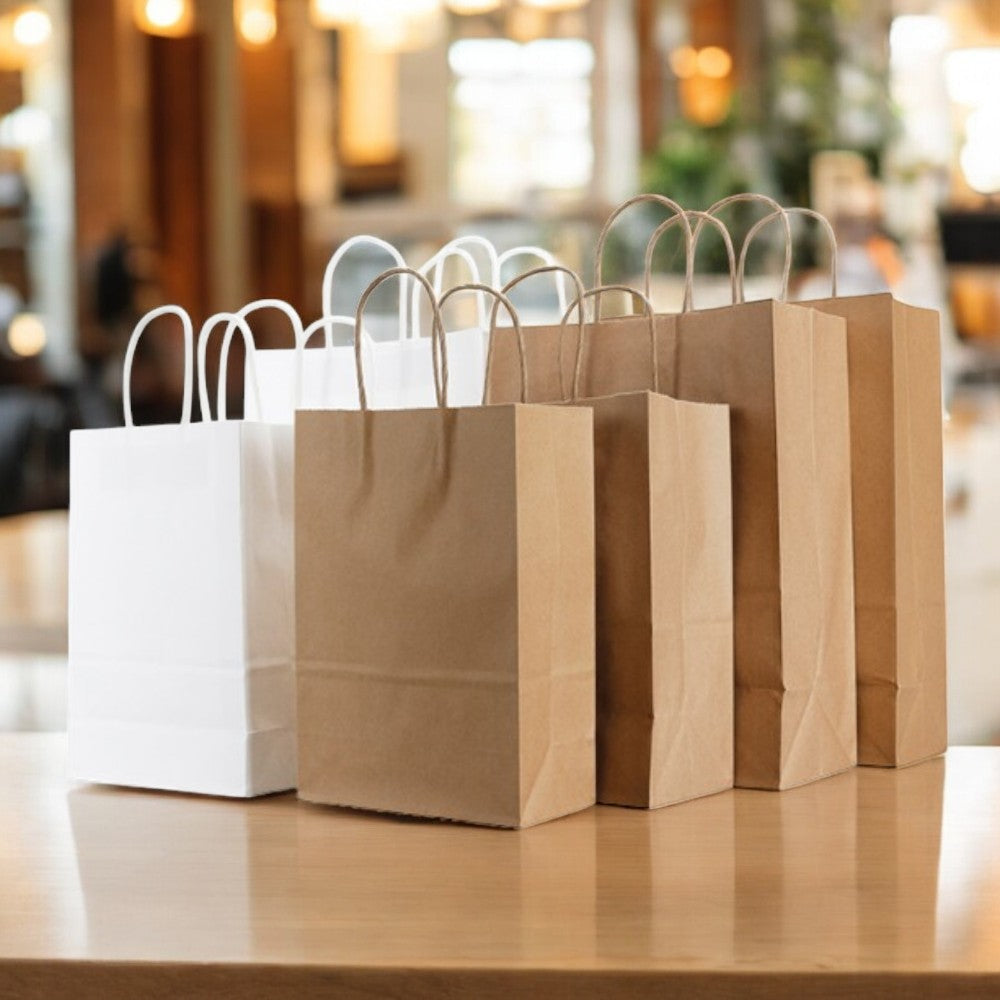
This is where kraft shines for professional catering businesses. The Kraft Paper Carrier Bag With Twist Handle (Pack 500) at £39.00 can be customised with your branding, turning a functional item into a marketing asset. Guests leave the event with your branded bag, creating a lasting impression.
Lead times for custom branding vary. Standard kraft containers ship immediately; custom printed versions typically require 2-3 weeks. Plan accordingly if you're ordering branded packaging for a specific event date.
Compostable catering packaging: End-of-life and disposal
Compostable packaging sounds straightforward until you ask the critical question: where will it actually be composted?
Many catering events happen at venues without composting infrastructure. A compostable clamshell box looks identical to a regular one, guests throw it in the bin, and it ends up in landfill alongside regular waste, where it won't break down.
For compostable packaging to work, three conditions must be met: the packaging must be certified compostable, your venue must have a composting system (or contract with a composting facility), and guests must understand what to do with it.
Commercial composting infrastructure
The UK has a network of industrial composting facilities, but coverage is uneven. Before specifying compostable packaging, contact your venue or local council to confirm composting is available.
Commercial composting facilities accept certified compostable food packaging. They operate at temperatures and moisture levels that break down materials within 12 weeks, far faster than home composting.
When composting infrastructure exists at your venue, compostable packaging becomes a genuine sustainability win. It signals to guests that your event takes environmental responsibility seriously, and it delivers a measurable outcome.
Certification and guest communication
Look for packaging certified to BS EN 13432, the standard for compostable materials. Certification means the packaging will break down in commercial composting conditions and won't leave toxic residue.
Bagasse 6" Round Plate Diam.155mm Pack 1000 →
If you're using compostable packaging, tell guests explicitly. Include a small note on serving tables or in the event programme: "All packaging is compostable. Please place containers in the composting bin." Without clear instruction, most people assume compostable packaging goes in regular waste.
Durable takeaway containers for hot food: Material selection
Hot food demands specific material properties. The container must withstand temperature without softening, resist oils and sauces without leaking, and maintain its shape under the weight of a full portion.
The Bagasse 7x5" Clamshell Meal Box (Pack 250) at £20.00 and the 9x6" version at £24.75 both excel here. Bagasse's natural rigidity and heat resistance make it the material of choice for takeaway operations serving hot food at volume.
Oil and sauce resistance
Oils and sauces are the enemy of weak packaging. They seep through paper, soften plastic, and cause lids to warp or separate. Bagasse resists this because its fibrous structure doesn't absorb moisture. A container holding curry or fish and chips stays structurally sound for hours.
Compare this to paper-based alternatives: they soften over time as they absorb moisture from the food.
Thermal performance and condensation
Hot food releases steam. The container must allow that steam to escape without trapping condensation that drips back onto the food. Bagasse clamshells with vented lids handle this naturally. The material breathes, and the hinge design permits airflow.
Condensation is more than an aesthetic problem. It makes food soggy and creates an unpleasant eating experience. It also weakens the container if moisture accumulates inside the hinge or lid mechanism.
Choosing the right quantity and mix for your event
Calculating packaging quantities sounds simple until you factor in realistic waste and variation.
Start with your confirmed guest count. Add 15% for kitchen waste, dropped containers, and guests taking extras. Then add another 10% as safety stock.
Your event format determines the mix. A plated dinner service needs different packaging than a buffet where guests self-serve. A cocktail reception with canapés requires smaller containers than a sit-down meal.
For mixed-format events, some hot items, some cold, stock multiple container types.
This flexibility ensures you can serve everything without forcing inappropriate containers on guests.
Cost, stock reliability, and procurement strategy
Sustainability and durability mean nothing if you can't source packaging reliably or if costs blow your catering margins.
Propus Packaging offers a straightforward advantage here: no minimum order requirements and next working day delivery for orders placed by 1pm.
Compare the per-unit cost across your most-used containers:
- Bagasse 7x5" Meal Box: £20.00 per 250 units = £0.08 per container
- Kraft 500ml Bowl with Lid: £51.00 per 300 units = £0.17 per container
- Bagasse Chip Tray 7x5": £22.50 per 500 units = £0.045 per container
The most cost-effective option for high-volume service is the bagasse chip tray.
Stock reliability is equally important.
For catering businesses, consolidating suppliers reduces administrative overhead.
Sustainable catering packaging for events works when you match materials to your specific service style and guest count.
The real decision isn't about which material is "best", it's about which solves your specific problem. Order conservatively, build 15% waste into your calculations, and choose a supplier that stocks reliably and delivers quickly. Learn More about our full range of sustainable catering packaging solutions, and let us help you serve your next event with confidence.
Frequently Asked Questions
What is the most sustainable packaging for catering?
Bagasse and kraft materials offer strong sustainability credentials. Bagasse comes from sugarcane fibre (a renewable agricultural byproduct) and is fully compostable and biodegradable. Kraft paper is recyclable and comes from wood pulp. Both avoid single-use plastics. Your choice depends on your event's waste infrastructure: if commercial composting is available, bagasse excels; if recycling is your primary route, kraft paper works well. Wooden cutlery and moulded pulp trays add further options. The most sustainable choice is the one your guests can actually dispose of properly in your area.
Is bagasse packaging suitable for hot and greasy food?
Yes. Bagasse containers have natural leak resistance to oils and sauces, making them ideal for hot takeaway dishes like burgers, chips, and curries. The material also provides heat insulation, helping keep food warm. Bagasse 6x6" burger boxes (152x152x78mm) cost £31.25 per pack of 500, while larger 9x6" meal boxes (230x155x78mm) are £24.75 per pack of 250, both perform reliably with greasy foods during high-volume service.
What is the difference between compostable and biodegradable packaging?
Biodegradable means the material will break down naturally over time, but the timeframe can be years and may leave microplastics. Compostable means it breaks down into nutrient-rich compost in a controlled environment (commercial composting facility) within a set timeframe, typically 12 weeks. Commercially compostable packaging requires industrial composting conditions; home compostable packaging breaks down in home compost bins. Bagasse products from Propus Packaging are fully compostable and biodegradable. Kraft products are recyclable. Disposal depends on local waste infrastructure. Check what facilities operate near your event venue.
How do you choose packaging for a large catering order?
Start by calculating portion sizes and quantities needed. Bagasse meal boxes work for seated service; plates suit plated events; kraft bowls suit soups and sides. Consider the food type: hot greasy items need bagasse or kraft with oil resistance; cold salads suit kraft or bagasse plates. Order in advance, bulk packs are more cost-effective. Propus Packaging offers next working day delivery on parcel orders placed by 1pm and free delivery on orders over £100, so plan ahead for large events to avoid rush charges and ensure stock availability.
Are kraft food containers recyclable?
Yes. Kraft paper containers are made from recyclable kraft paperboard (often PE-lined for food safety) and can be recycled through standard paper waste streams in most areas. Kraft 500ml round bowls with lids (£51.00 per pack of 300) and kraft carrier bags (£39.00 per pack of 500) are both fully recyclable. However, PE-lined kraft must go to facilities that handle coated paper, check with your local authority to confirm your area accepts PE-lined kraft in curbside recycling. If unsure, composting is often a safer disposal route for food-soiled kraft.

