














Table of Contents
- Step 1: Calculate Your True Takeaway Packaging Costs
- Step 2: Build a Simple Food Packaging Cost Calculator
- Step 3: Switch to Durable Takeaway Containers for Hot Food
- Step 4: Buy Wholesale Takeaway Packaging Without Overordering
- Step 5: Reduce Packaging Waste in Restaurants and Takeaways
- Step 6: Cut Costs Without Breaking UK Packaging Rules
- Step 7: Track Savings and Adjust Every Quarter
- Frequently Asked Questions
Last Updated: October 8, 2026
Step 1: Calculate Your True Takeaway Packaging Costs
Most takeaway owners guess at packaging spend, and that guess is usually wrong. Reducing takeaway packaging costs starts with knowing what you actually spend.
Your true takeaway packaging costs are not just the unit price on your invoice. They include:
- The unit cost of every box, cup, lid, bag and napkin
- Delivery charges and any minimum order penalties
- Storage space and stock you never use
Add those up and the real figure is often higher than the invoice suggests. The official GOV.UK guidance on packaging producer responsibilities is a useful starting point for understanding what you are legally responsible for as a business that handles packaging.
Step 2: Build a Simple Food Packaging Cost Calculator
A food packaging cost calculator does not need to be complicated. A four-column spreadsheet beats most software.
Here is the structure we recommend:
| Column | What to Enter | Example |
|---|---|---|
| Item | Packaging product name | Kraft 26oz noodle box |
| Cost per pack | Price you pay | £39.50 per pack of 500 |
| Units per pack | How many you get | 500 |
| Cost per unit | Cost per pack ÷ units | £0.079 |
Multiply cost per unit by units per order to get packaging cost per order, and track weekly.

Worked Example: 200 Covers a Day
Say you serve 200 takeaway covers a day. Each order uses one noodle box, one napkin and one carrier bag.
- Noodle box: £39.50 ÷ 500 = £0.079 per unit
- Napkin: roughly £0.01 per unit
- Carrier bag: roughly £0.05 per unit
That is about £0.14 per order: £28 daily, or roughly £840 a month. Shave two pence off each order and you save £120 a month without changing your food.
Cost Scenarios by Business Size and Packaging Mix
The per-order figure is the foundation, but not the whole budget. The table below scales the calculation across three takeaway profiles.
| Business profile | Orders per day | Packaging cost per order | Monthly packaging spend |
|---|---|---|---|
| Small cafe, low packaging | 60 | £0.10 | ~£180 |
| Mid-size takeaway, mixed hot food | 200 | £0.14 | ~£840 |
| Busy multi-item takeaway | 400 | £0.22 | ~£2,640 |
Packaging spend scales with order volume and items per order, and owners underestimate the second. Adding a side and a drink to every order can double packaging cost per order without changing menu prices.
How Packaging Material and Format Change the Cost
Material and format affect cost three ways: unit price, failure rate and regulatory fees.
- Unit price, a heavier, lined kraft box costs more per unit than a thin plastic alternative, but fails less often.
- Failure rate, leaks, soggy bases and popped lids generate refunds, remakes and complaints. A box costing two pence more that prevents one refund a week is almost always cheaper overall.
- Regulatory fees, under the extended producer responsibility scheme, fees are based on material and weight, and household packaging attracts higher fees than non-household. A recyclable kraft box and an unrecyclable plastic lid can sit in very different fee bands even if their unit prices are similar.
Compare options using a true cost per order that includes unit price, a failure allowance (refunds and remakes) and an EPR fee allowance. The lowest unit price is frequently not the lowest true cost.
Add the Full Compliance Cost
If your business is obligated under EPR, the packaging line in your accounts is not the whole story. Budget for:
- Registration charges
- EPR fees, based on tonnage and material
- Data collection and reporting time (or software)
For a small obligated business, admin costs often rival the fee itself, so build both into the calculator.
A Step-by-Step Cost Estimation Workflow
For a repeatable process rather than a one-off calculation, work through these steps:
- Identify whether you are a microbusiness, small producer or large producer based on turnover and packaging tonnage.
- List every packaging item you place on the market, by material and format.
- Estimate the weight of each item and multiply by annual usage to get tonnage per material.
- Estimate EPR fees using the current published rates for each material and household/non-household split.
- Add registration, reporting, scheme and internal admin costs.
- Add the packaging unit cost and a failure allowance to get true cost per order.
- Report and pay to the scheme on the required cycle.
- Review quarterly and adjust as rates, volumes and materials change.
This is the sequence regulators expect you to evidence, and doing it in order makes reporting far less painful.
Step 3: Switch to Durable Takeaway Containers for Hot Food
Durable takeaway containers for hot food pay for themselves twice: once when they stop leaks, again when they stop complaints.
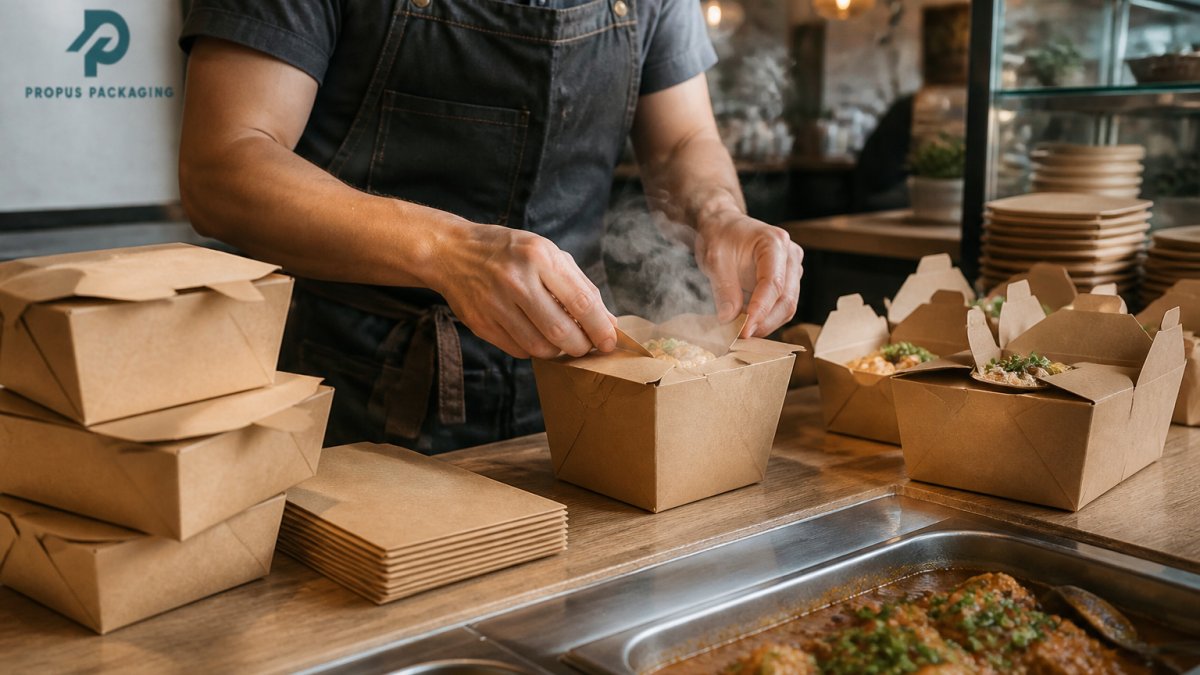
Cheap containers fail predictably: lids pop open in transit, bases go soft under sauce, and customers get a soggy bag and a refund request.
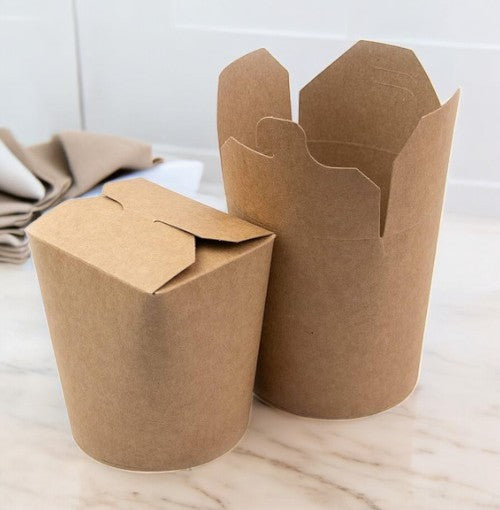
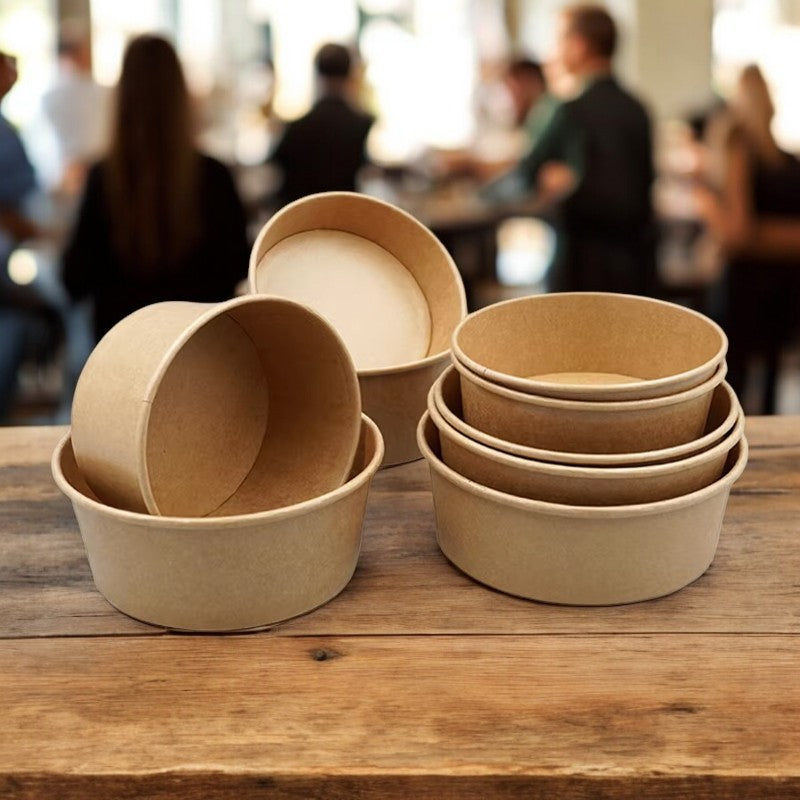
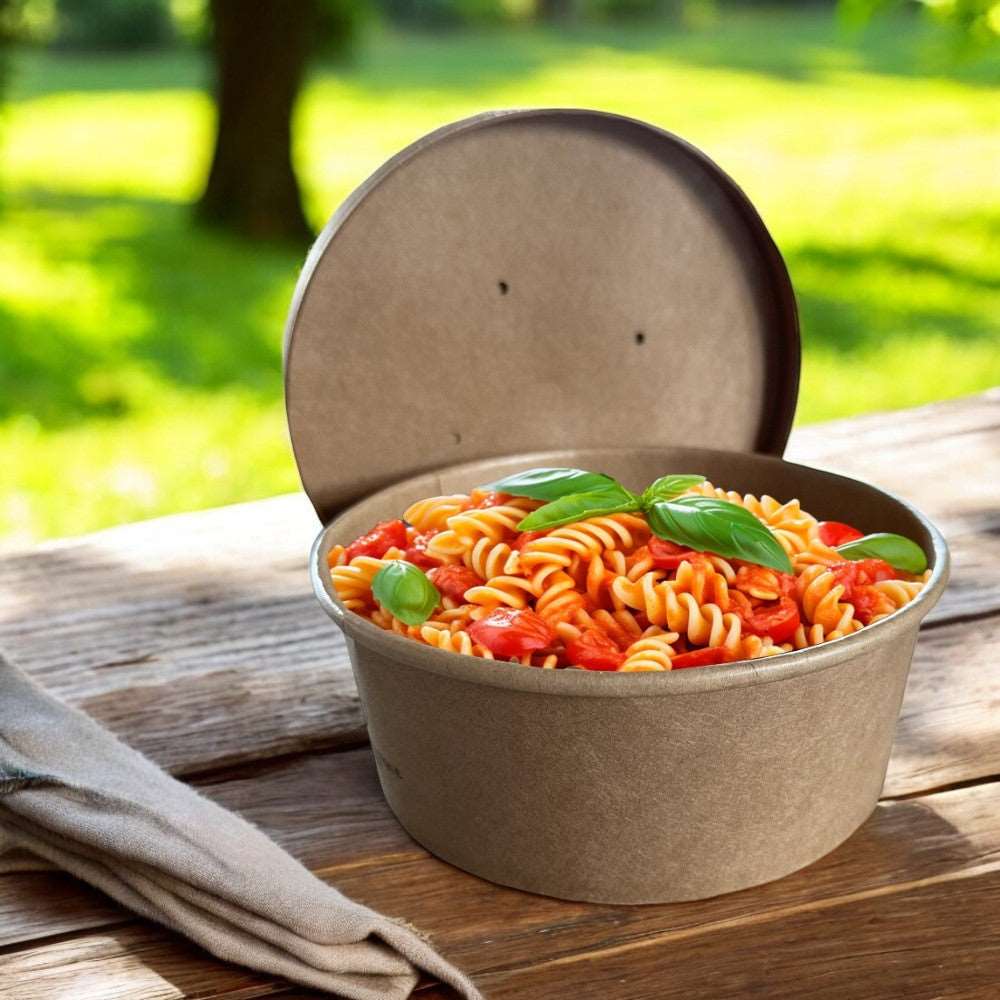
Look for a secure interlocking lid and leak-proof lining. Our Kraft 26oz Round Noodle Box Pack 500 has both, with a PE lining that keeps food fresh, insulates it and stays leak proof.
A common mistake is buying the cheapest box per unit, then spending more on extra bags, double wrapping and replacement meals.
Step 4: Buy Wholesale Takeaway Packaging Without Overordering
Wholesale takeaway packaging saves money only when the stock gets used. Bulk buying is not cheaper if half of it sits in a back room for a year.
Three rules keep bulk buying profitable:
- Match pack sizes to your real weekly usage
- Never order more than six to eight weeks of stock at once
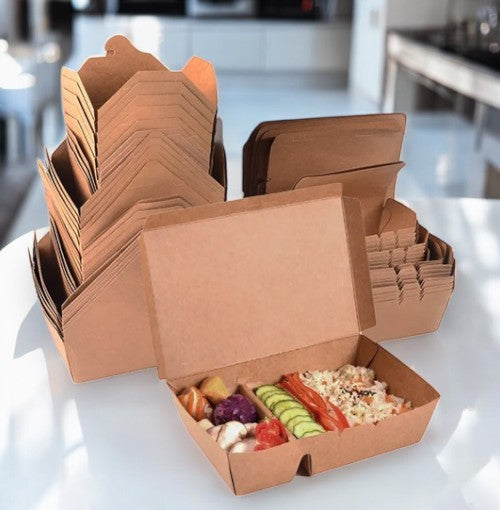
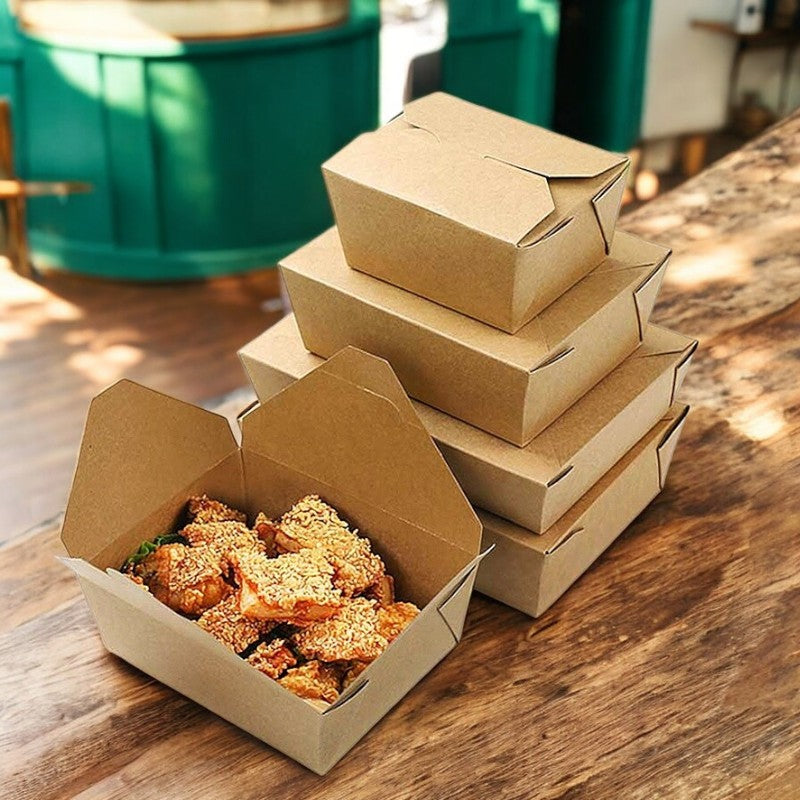
Smaller formats suit lower-volume sites. Our Small Kraft Food Tray 100x60x40mm Pack 1000 suits smaller portions and sides, while the Large Kraft Food Tray 140x85x50mm Pack 1000 handles bigger mains. Both are recyclable with a leak-proof PE lining.


Step 5: Reduce Packaging Waste in Restaurants and Takeaways
To reduce packaging waste in restaurants, find where it actually happens, it is rarely where owners expect.
Kraft 16oz Round Noodle Box Pack 500 →
The biggest culprits are often:
- Staff grabbing the wrong size box because sizes are not labelled
- Double-cupping drinks out of habit rather than need
- Over-bagging single-item orders
Fix these simply: label storage by size, set a clear rule for a second cup, and train new staff on packing standards in their first week.
Then measure: weigh your packaging waste bin for a week before and after any change. If the number does not move, the change did not work, a more honest signal than staff opinion.
Step 6: Cut Costs Without Breaking UK Packaging Rules
Cost cutting and compliance have to move together. Getting this wrong is expensive, and the rules keep tightening.
Packaging producer responsibility in the UK now sits under the extended producer responsibility (EPR) for packaging scheme, administered by the environmental regulator for England, with equivalent regulators in the devolved administrations. The official guidance on extended producer responsibility for packaging is the authoritative starting point, and it is worth reading in full rather than relying on a supplier summary.
Who is actually obligated
Obligations are tiered. A large producer has turnover of £2 million or more and handles 50 tonnes or more of packaging a year.
Handling packaging means more than selling it. It covers:
- Supplying packaging to a consumer (for example, a takeaway box handed to a customer)
- Using packaging to sell goods
- Importing packaged goods
For a takeaway, the boxes, cups, lids, bags, napkins and cutlery you hand to customers are almost always in scope. Household packaging, most takeaway packaging, attracts the highest EPR fees because it is hardest to recycle at scale.
What the fees are based on
EPR fees are calculated on the tonnage you place on the market, split by material and household/non-household. Harder-to-recycle materials attract higher fees: a light but unrecyclable plastic lid can cost more than a heavier, easily recycled paper box.
Fee rates are set annually and change, so always check current published rates before you budget.
The full compliance cost, not just the fee
The EPR fee is only one line in the compliance budget. Most businesses underestimate the rest:
- Data collection and reporting, you must record packaging by material, weight and format, and report it. This is admin time, often meaning new processes or software.
- Registration, producers register with the scheme and pay a charge.
- Scheme or compliance adviser charges, using a scheme or adviser to handle reporting is a recurring cost.
- Packaging redesign, switching materials to reduce fees often means new tooling, artwork or supplier minimums.
For smaller obligated businesses, admin and internal compliance costs often rival or exceed the fee itself. Budget for both.
Deadlines and penalties
Reporting and payment run to fixed annual cycles. Missing a deadline can trigger penalties, and regulators have been explicit that enforcement will follow. The real risk is retrospective assessment of fees you should have paid, plus fixing your records after the fact.
How to cut costs without creating a compliance problem
- Switch to recyclable materials such as kraft paper board where the food allows, because material choice directly affects the fee band.
- Cut unnecessary layers rather than downgrading the layers that protect food.
- Keep clean records of what you buy and use, by material and weight, so reporting is straightforward and you are not over-declaring.
- Check your obligations directly with the regulator rather than relying on supplier claims.
For current fee amounts, thresholds and deadlines, always check the official source, a supplier's summary is not a substitute for the actual rules.
Step 7: Track Savings and Adjust Every Quarter
Savings that are not tracked disappear. Set a quarterly review and stick to it.
At each review, check four numbers:
- Packaging cost per order, compared with last quarter
- Total packaging spend as a share of revenue
- Refunds and complaints linked to packaging failure
- Stock write-offs from damage or expiry
If cost per order falls and complaints stay flat, your changes are working.
Adjust in small steps: change one material or pack size at a time, then measure again. Big simultaneous switches make it impossible to tell what helped.
Running a takeaway on tight margins means every penny in the packaging line matters, and getting it wrong hurts twice: once in cost, once in customer complaints.
Frequently Asked Questions
How can takeaway businesses reduce packaging costs?
Start by calculating your true cost per order, not just the unit price. That means adding delivery charges, storage, spoilage and staff time to the pack price you pay. Then compare container sizes against actual portion sizes, switch to bulk packs where you get a lower unit rate, and cut items customers do not use, such as extra napkins or cutlery. Small changes across hundreds of orders a week add up quickly.
What is the most cost-effective packaging for takeaway food?
It depends on your menu, but kraft paper containers and trays usually offer the best balance of price, insulation and leak resistance for hot food. For example, a pack of 500 Kraft 16oz Round Noodle Boxes costs £32.50, which works out at 6.5p per box. Buying in larger pack sizes lowers the unit rate further, so match the pack to your weekly volume rather than ordering small and often.
Does buying takeaway packaging in bulk save money?
Yes, bulk packs almost always lower the cost per item. A pack of 1,000 Small Kraft Food Trays at £27.50 works out at 2.75p per tray, while smaller packs usually cost more per unit. The risk is overordering on lines you rarely use. Check your sales data first, then buy bulk only on your top three or four packaging lines and keep the rest at smaller quantities.
How do I compare the true cost of takeaway packaging?
Work out cost per order, not cost per pack. Divide the pack price by the number of items, then multiply by how many items a typical order uses. Add any delivery charge, storage cost and wastage. A container that costs a penny more but prevents leaks and refunds is often cheaper overall. Run this calculation for your three most popular dishes before switching suppliers.

